Oss, Omoplata and Everything In Between: A Bury Beginner's Guide to Mat Lingo
Walking into your first Bury jiu-jitsu class can feel like stepping into a conversation that started without you. Someone shouts oss, the coach says shrimp, a friendly blue belt mentions omoplata, and you're still working out where to put your water bottle. The good news? You don't need to memorise a dictionary before you step on the mats. You just need a few plain-English translations and the confidence to ask.
This guide covers the words you'll hear most often in local clubs around Bury, Ramsbottom, Radcliffe and beyond. Terms vary from gym to gym, so treat it as a starting point rather than gospel. If your coach uses a word differently, go with theirs.
First sounds: oss, coach and the room itself
Oss (said like 'oss', rhyming with 'boss') is a common BJJ greeting, acknowledgement or way of saying 'understood'. Some clubs use it constantly; others barely at all. In a typical Bury class you might hear it when the coach calls everyone to line up, or when a partner says 'good roll'. You won't be thrown out for not saying it.
The person leading the session might be called coach, professor or simply by their first name. In BJJ, professor is often used for a black belt, but it's not a strict rule. Academy, club and gym all mean the same place, and the mats is where the work happens.
Gi (also called a kimono) is the cotton uniform. No-gi means rash guard and shorts. Belt and stripes relate to grading, but don't worry about those in week one.
Positions: where you are on the mat
Most beginners hear position names before they understand them. That's normal.
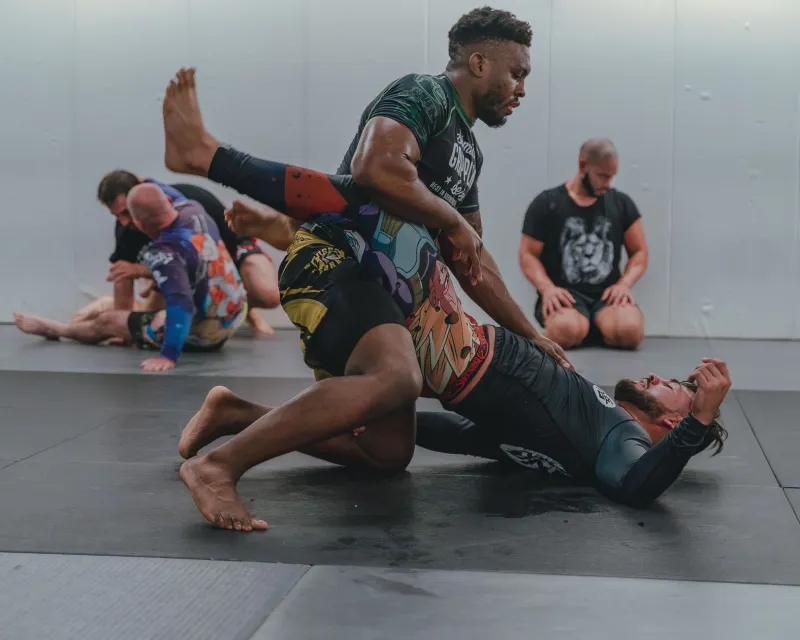
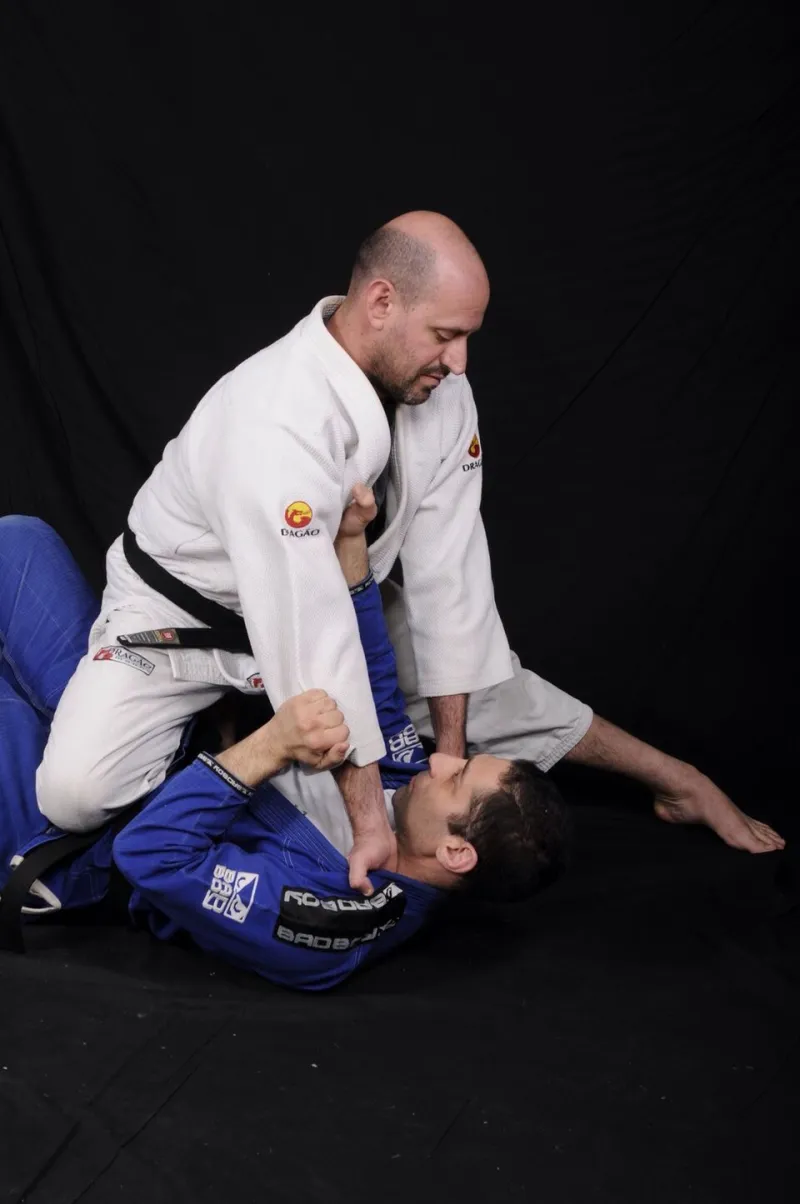
Mount is when one grappler sits on top of another, usually with knees or feet on the mat. Guard is the bottom player's game: using legs and hips to control or attack from underneath. Closed guard means ankles locked; open guard means they're not. Half guard is when one leg is trapped between the opponent's legs.
Side control is chest-to-chest across the opponent. Back control is behind them, often with hooks (feet inside the thighs). North-south is head-to-head, perpendicular. Turtle is curled up on all fours, protecting the neck and arms.
You'll also hear standing, takedown and guard pull. A takedown brings the action to the floor; a guard pull is when someone sits or drops to guard on purpose.
Actions: the verbs your coach will shout
Shrimp is not a seafood special. It's a hip escape: moving your hips away from your opponent to create space. Bridge is lifting your hips to unbalance them. Frame means using your arms or bones to keep space. Post means putting a hand or foot down to stop being swept.
Pass the guard is the top player's job: getting past the legs. Sweep is the bottom player reversing position. Submit is the finish. Tap is how you signal surrender, and you should do it early and often. Roll means sparring, not a bread bun. Drill is repeated practice; live means with resistance.
Submissions: omoplata and the rest
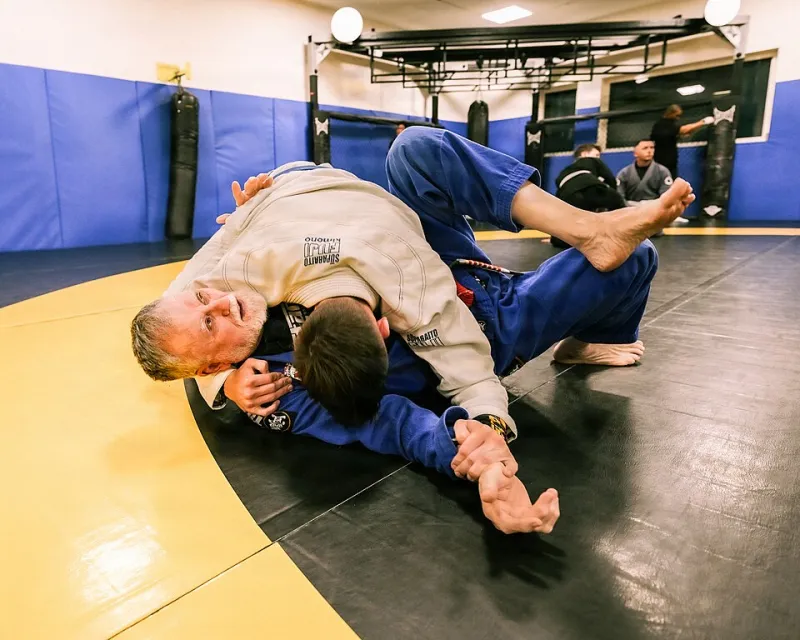
An omoplata (oh-mo-plah-tah) is a shoulder lock that uses the legs. It's named after the shoulder blade and is not something most white belts need to master in their first month. You'll also hear armbar, triangle, kimura, Americana, rear naked choke (often shortened to RNC), guillotine and bow and arrow.
Some submissions, like heel hooks, are often restricted for beginners at local clubs. Listen to your coach's rules rather than copying what you've seen online.
Gym shorthand and Bury mat culture
Rolling is sparring. Rounds are timed sparring periods. Open mat is unstructured practice time. King of the mat is a rotation where the winner stays on. Shark tank is when one grappler faces a series of fresh opponents, usually saved for more experienced people.
Line up means form a row for announcements. Water break is self-explanatory. House rules cover the practical stuff: clean kit, trimmed nails, no shoes on the mats, tell the coach about injuries. Every club in and around Bury will have its own rhythm, so copy what you see and ask if you're unsure.
Japanese, Portuguese and plain English in one room
BJJ borrows from Portuguese, Japanese and gym English. Jiu-jitsu itself comes from Japanese martial arts, while Brazilian jiu-jitsu is the modern grappling style. You might hear dojo for a training hall, tatami for mats, or sensei for a teacher, though many BJJ clubs use coach instead. None of it is a test. It's just shared language.
How to ask without feeling like a numpty
The fastest way to learn the lingo is to admit you don't know it. After a demonstration, try: 'Sorry, what was that position called?' or 'Can you show me that shrimp again?' Pairing up with a more experienced belt is a great chance to ask quietly. Repeat the word back, then use it. If you're worried about forgetting, keep a note on your phone after class. No one will judge you for it.
Nodding along is the only real mistake. A good coach would rather explain a term three times than have you guessing. And if you hear something completely new, say so. Someone else in the room is probably wondering the same thing.
A quick glossary to screenshot
- Oss: greeting or acknowledgement.
- Gi: cotton uniform; no-gi: rash guard and shorts.
- Guard: bottom player's leg-based control.
- Mount: top position sitting on the opponent.
- Side control: chest-to-chest top position.
- Back control: behind the opponent with hooks.
- Shrimp: hip escape.
- Bridge: hip lift to unbalance.
- Frame: use arms or bones to make space.
- Post: hand or foot down to stop a sweep.
- Pass: get past the opponent's legs.
- Sweep: reverse from bottom to top.
- Roll: spar.
- Tap: signal surrender.
- Omoplata: leg-based shoulder lock.
- Open mat: unstructured practice.
You won't learn all of this in one session, and you don't need to. Pick up a word or two each week, ask when you're stuck, and soon the chatter on the Bury mats will sound less like code and more like a community you belong to.