The Friendly First Six Weeks: Why Bury Beginners Need a Mat-Mate
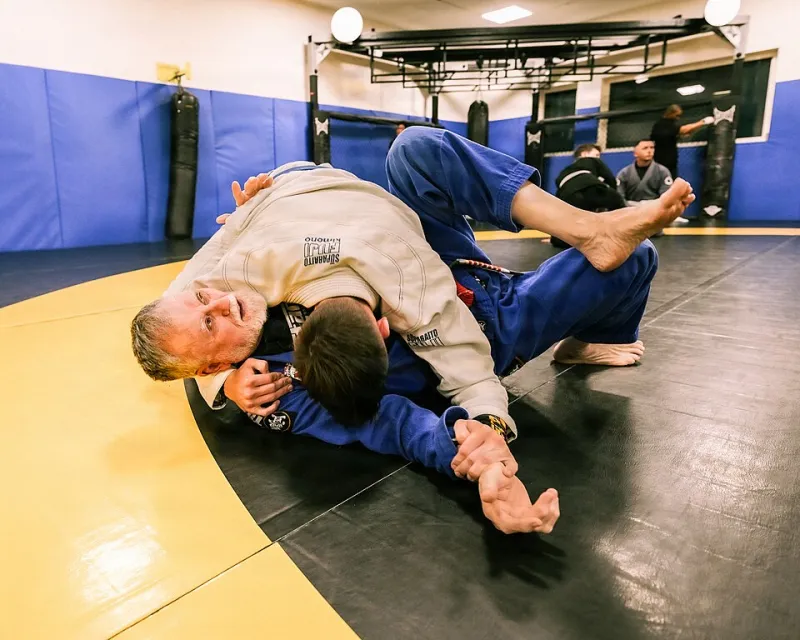
Photo: U.S. Army photo by Sgt. Jose Lora, Public domain, via Wikimedia Commons
It’s a damp Tuesday night somewhere off Bury’s ring road. A new starter is hovering by the changing-room door, kit bag in one hand, phone in the other, trying to work out whether they’re in the right place. The coach is warm but busy. The regulars are lovely but already mid-conversation. Nobody is being unkind — it’s just that a jiu-jitsu club can feel like a well-established family when you’re the new face at the edge of the mats.
That’s where a mat-mate comes in. Not a coach, not a babysitter, not a formal mentor with a clipboard. Just one experienced grappler — usually a blue or purple belt — who takes a new white belt under their wing for the first six weeks. In Bury, where clubs are friendly but often stretched, a simple buddy system can be the difference between a beginner feeling welcomed and a beginner quietly deciding not to come back.
Why the first six weeks matter
Most people who quit jiu-jitsu don’t quit because they can’t handle the technique. They quit because they feel lost. They don’t know where to stand, when to bow (or whether to bow at all), how hard to drill, what to bring, or why everyone keeps saying “oss” while they’re still working out how to tie their belt. The unknown is often bigger than the training itself.
A mat-mate shrinks that unknown. They meet the new starter at the door, point out the changing rooms, introduce them to one or two people, and pair up for the first warm-up. They explain the club’s etiquette in plain English: ask before you join a round, tap early, keep your nails short, don’t coach unless you’re asked. They make the first session feel less like an audition and more like a welcome.
For clubs, this matters for retention. A beginner who feels seen in week one is far more likely to be there in week six. In 2026, with more local options than ever, the welcome is part of the product. Bury isn’t a huge city; word travels. A club that looks after its white belts builds a reputation that no amount of social media posting can buy.
What a mat-mate actually does
On the mats, a good mat-mate is a bridge. They don’t teach the class — that’s the coach’s job — but they translate. They show the new starter where to line up, how to drill the move without panic, and how to partner up safely. They remind them to tap early and tap often. They resist the urge to smash a nervous beginner in sparring, and they explain that sitting out a round is completely fine.
Off the mats, they’re just as useful. They send a quick message before the second session: “You coming down tonight? I’ll be there from 6.30.” They explain the timetable, the fees, the kit requirements and the fact that nobody cares if your gi is second-hand. They check in after a tough session. They answer the daft questions that people are too embarrassed to ask the coach.
Crucially, a mat-mate is not a permanent crutch. Six weeks is usually enough to learn the rhythms of the club, recognise a few faces and feel comfortable turning up alone. After that, the buddy relationship can fade naturally into ordinary training friendship — which is exactly the point.
A simple checklist for Bury clubs
If you run a club and want to try a buddy system, keep it light. Don’t turn it into a bureaucratic programme with badges and paperwork. Start with a few volunteers and a clear expectation.
- Ask experienced students who actually enjoy welcoming people. Enthusiasm matters more than belt rank.
- Pair by schedule first, personality second. A buddy who trains on the same nights is worth their weight in gold.
- Keep the formal pairing to six weeks, with a natural review at the end. No one should feel stuck.
- Give buddies a one-page guide: club etiquette, timetable, kit advice, who to speak to about fees, and the reminder that they are not responsible for coaching.
- Check in with the new starter at week two and week six. A two-minute conversation can catch a problem before it becomes a dropout.
- Recognise the buddies publicly now and then. A mention in the group chat or a nod at the end of class goes a long way.
- Make it opt-in for new starters. Some people want to find their own feet; that’s fine too.
- Protect your volunteers. One buddy shouldn’t be paired with every new person who walks through the door.
What good looks like for the new starter
If you’re the new white belt, you can help your mat-mate help you. Turn up ten minutes early. Ask the questions you think are stupid — they almost never are. Be honest about nerves. Tap early and tap often. Don’t compare yourself to the person next to you who has been training for three years. And say thank you when someone gives up their drilling round to show you where to put your feet.
A good mat-mate will also check in on the things that don’t get said. If you’re worried about being the only woman in the room, or the oldest, or the least fit, tell them. Bury clubs are generally welcoming, but every beginner carries a bit of self-consciousness through the door. A buddy can normalise that.
Building a buddy culture in Bury
The best thing about a mat-mate scheme is that it costs almost nothing. It doesn’t require new mats, new kit or a new timetable. It just requires a club to decide that hospitality is part of training. In a town like Bury, where people value a friendly face and a straight answer, that decision can shape the whole atmosphere.
So if you run a local club, try it with the next intake. Pair one new starter with one experienced volunteer for six weeks and see what happens. And if you’re thinking about walking through the door for the first time in 2026, ask whether there’s a mat-mate you can talk to. You shouldn’t have to sink or swim. Nobody should.