Stripes Are Not the Whole Story: What Bury Gradings Actually Reward
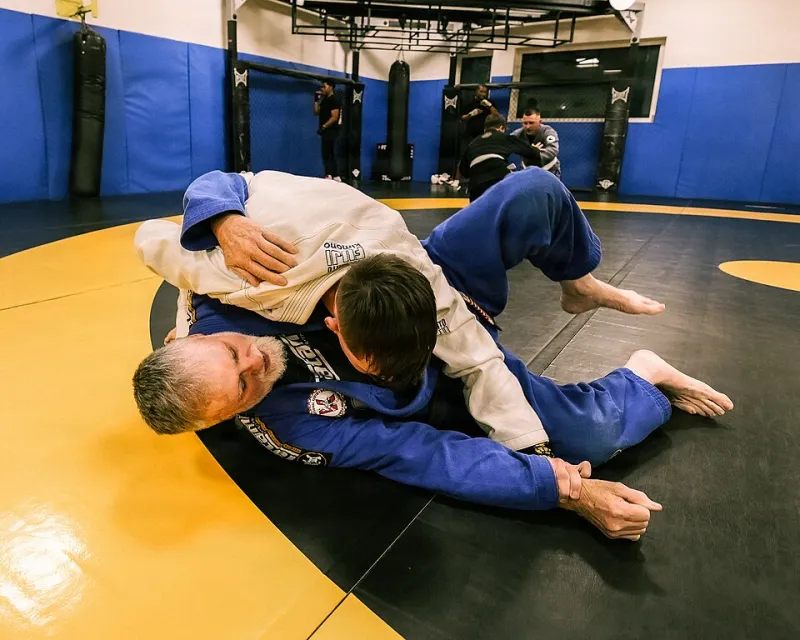
Photo: U.S. Army photo by Sgt. Jose Lora, Public domain, via Wikimedia Commons
Stripes and belts are easy to count. The stuff that actually earns them is harder to see from the sidelines: turning up on cold Tuesdays, tapping early, looking after a newer training partner, listening when a coach corrects a detail. In Bury clubs, grading day is rarely a surprise test. It is a checkpoint in a longer conversation between you and your coach.
Grading is a conversation, not a checklist
A grading can include technique demonstrations, sparring rounds, fitness work and sometimes a verbal or written element. It varies from club to club. What tends to stay consistent is the bigger question behind it: can this person train safely, learn steadily and represent the club well?
That is why a coach is not just counting stripes. A student who can reel off twenty techniques but panics in live rounds, ignores safety or treats lower belts roughly is not ready in the way that matters. A student who knows fewer moves but listens, adjusts and looks after their partner often is.
Attendance tells a story
Consistency is boring and powerful. A coach can usually tell who has been putting in the hours, not because they are keeping a spreadsheet of your life, but because your movement changes. You recognise positions faster. You recover quicker. You stop making the same mistake every single round.
That does not mean you have to train every day. Life in Bury is busy: work, family, weather, the usual. The point is steady effort over time. Two solid sessions a week for months will usually teach you more than a frantic fortnight of cramming before grading day. If you have had a break, be honest about it and get back into the rhythm. Coaches generally respect a student who returns sensibly more than one who pretends the gap never happened.
Attitude is visible on the mat
You do not need to be the loudest person in the room. You do need to be coachable. That means trying the correction you have been given, asking sensible questions and not turning every round into a debate about the rules. Mat lawyers are tiring. Good training partners are curious, not combative.
Attitude also shows in how you handle being uncomfortable. Everyone gets smashed sometimes. Can you stay calm, defend intelligently and reset? Can you lose a round without sulking or taking it out on the next partner? That kind of resilience is a skill, and it is one coaches notice.
Safety is a skill
Safety is not just a list of rules on the wall. It is a practice. Keep your nails short. Wash your kit. Tape your fingers if they need it. Tap early when you are caught, especially in training. Do not crank submissions on a newer partner just because you can.
Coaches watch for this because a grading is not only about whether you can perform; it is about whether you can be trusted on a busy mat. A safe training partner helps the whole room improve. A reckless one creates injuries, nerves and a worse culture. If you want to impress your coach, be the person others are glad to see in the lineup.
Helping partners is part of progress
Some of the best BJJ students are not the ones who win every round. They are the ones who make the people around them better. They give clear, calm feedback. They let a newer white belt work without turning every roll into a highlight reel. They ask questions that help the group think.
If you train in Bury, Ramsbottom, Whitefield or Radcliffe, you have probably seen this already: the higher belts who are patient with beginners are usually the ones who stick around. Helping a partner is not a distraction from your own progress. It sharpens your understanding. Explaining a position simply is one of the fastest ways to find out whether you actually know it.
Long-term progress beats last-minute cramming
Grading day can make people panic. Suddenly every technique feels important and every gap feels like a warning sign. Try not to turn the last two weeks into a stressful exam season. Keep training, keep sleeping and keep asking questions. If your coach has given you areas to work on, focus on those. Do not try to learn twelve new submissions in a fortnight.
Long-term progress tends to look unglamorous: showing up, drilling the basics, getting a bit less frantic in sparring, learning to breathe. That is the material gradings are actually made from. The belt is a marker, not a magic upgrade.
Managing expectations
Not everyone gets promoted on the same timeline. That is not necessarily a comment on your worth as a person or a grappler. Clubs have different standards, different schedules and different numbers of students. Your coach may want to see more consistency, more composure or more time at your current level. That can be frustrating, but it is usually not personal.
Ask for feedback if you are unsure. A simple question like “what should I focus on before the next grading?” is usually welcome. Then act on the answer. Coaches notice students who take feedback seriously far more than students who simply ask for a stripe.
After the grading
Whether you get the belt, the stripe or neither, take a moment to recognise what you have learned. Write down one thing that felt strong and one thing that needs work. Thank your training partners. Then get back on the mat.
The grading is not the finish line. It is a snapshot. The real work is the Tuesday nights, the awkward drills, the rounds where you get stuck and the small improvements you barely notice. Bury’s BJJ community is built on that kind of patient, friendly effort — and that is exactly what gradings are there to reward.