The Cough Check: A Bury Grappler's Guide to Colds, Bugs and When to Bow Out

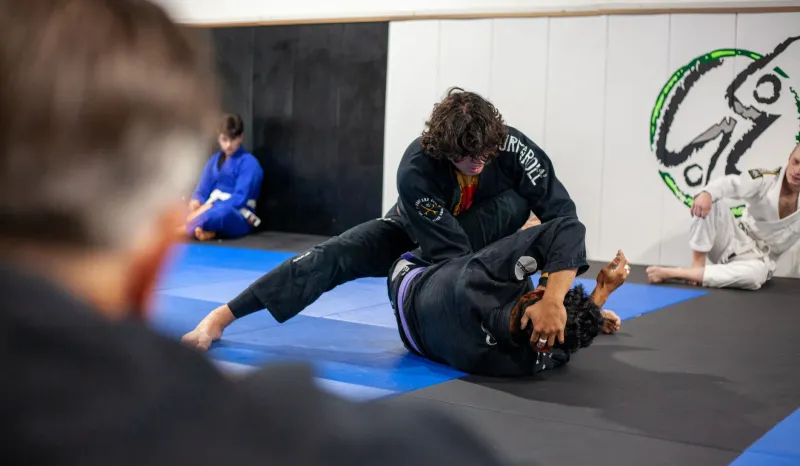
Photo: FernandoSantos, CC BY-SA 3.0, via Wikimedia Commons
November in Bury has plenty going for it. The lights are going up on the Rock, the market is doing a brisk trade in hot sandwiches, and the East Lancashire Railway is dusting off its Santa hats. What November also does rather well is shift germs about. Every year, without fail, someone turns up to a session with a cough that could strip wallpaper, and half the club spends the next fortnight sounding like they've swallowed a bag of gravel.
That's not a dig at anyone. Grapplers are a stubborn bunch. We like to think a bit of a sniffle is just part of the game, something to push through on the way to a stripe or a competition. But when you're training a contact sport on a shared mat in a shared room, the decision about whether to roll when you're rough isn't just about you. It's about the person you're drilling with, the coach running the session, and the white belt who's been building up the courage to walk through the door for three weeks.
So here's a sensible, non-preachy way to think about it.
Why the mats are a germ motorway
Jiu-jitsu is about as close as you can get to another human without swapping keys. You're breathing hard, sweating, and in contact with the same mats that everyone else has been on. A gi is basically a giant cotton petri dish, and a water bottle left on the side is an invitation. None of this is a reason to panic. It's just a reason to be honest with yourself.
Most gyms in Bury are clean and well run. Coaches wipe mats, people wash their kit, and the general standard of hygiene is good. But a virus doesn't need a dirty mat to spread. It just needs a cough, a shared pad, or a hand that's just wiped a nose before a grip fight.
The old 'above the neck' rule
You've probably heard the rule: if your symptoms are above the neck — a mild sniffle, a slightly scratchy throat, a bit of congestion — you can train. If they're below the neck — chesty cough, aches, fever, stomach trouble — you stay home.
It's a decent starting point, but it's not a free pass. A mild cold is still a cold. You can still pass it on. And if you're feeling wiped out, foggy, or you're reaching for the Lemsip before you've had breakfast, that's your body asking for a day off.
The rule works best when you apply a bit of judgement. A twenty-minute drill session with a clear head is one thing. A hard sparring round where you're gasping for air and coughing into your partner's face is another.
A quick check before you pack your bag
Before you zip up the gi bag, run through these five questions:
- Do you have a fever? If yes, stop. That's not a training decision, that's a rest decision.
- Is it chesty? A cough that comes from your chest, or any wheezing or shortness of breath, is a sign to sit it out.
- Have you had stomach trouble in the last 48 hours? Sickness or diarrhoea means you're still likely to be contagious. Wait.
- Could you do light exercise without feeling wrecked? If walking up the stairs leaves you needing a sit down, the mats can wait.
- Would you be happy rolling with someone who has your symptoms? If the answer is no, there's your answer.
If you get through those and you're still unsure, the safest option is to give it a miss. There will be another session on Thursday. There won't be another set of training partners if you keep passing on bugs.
If you're sitting one out, say so
The worst thing you can do when you're ill is go silent. Coaches understand. If you've booked onto a class and you wake up feeling rough, a quick message saying 'I'm going to sit this one out, don't want to pass anything on' is all it takes. Most coaches will appreciate it. Some will send you a drill you can do at home, or a video to watch. Others will just say get well soon.
Use the time. Watch a match on YouTube. Work on your grip strength with a towel. Stretch. Read up on a position you keep getting stuck in. A couple of days off the mat doesn't have to mean a couple of days off jiu-jitsu.
Coming back without losing momentum
The first session back after a cold is not the time to prove a point. Ease in. Do the warm-up, drill the technique, and maybe skip the hard sparring if you're still coughing. Your cardio hasn't disappeared. It'll come back faster than you think.
Drink water, get some sleep, and wash your kit properly. A clean gi is a gift to your training partners, especially in November.
Protecting the room is part of the deal
Bury's jiu-jitsu scene is friendly. That's one of the best things about it. People look out for each other. Protecting the room from your cold isn't a rule imposed from above. It's just part of being a good training partner. The person next to you might be asthmatic. The coach might have a kids' class to teach. The new starter might have been ill last week and is finally feeling human again.
A few days off in November is a fair trade for a healthy December. The mats will still be there. The festive open mats will still be there. And so will your training partners, assuming nobody coughed on them.
So if you're rough, rest. If you're not sure, ask. And if you do turn up, bring a towel, wash your hands, and keep your bugs to yourself. Oss.