The Newest White Belt Might Be Your Most Useful Roll in Bury
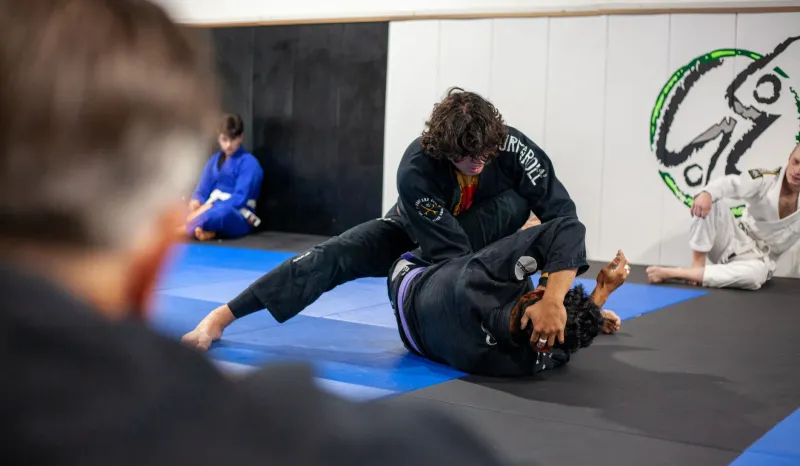
The quiet value of a fresh training partner
Walk into a Bury jiu-jitsu class and it is natural to look across the mat for the highest belt in the room. Experience matters, after all. A brown belt can spot the gap in your guard, explain a grip in plain English and make a messy position feel almost logical. But if you only chase the top belts, you will miss something important: the newest white belt might be the most useful roll of your week.
That is not a sentimental point about being nice to beginners. It is practical. A good training partner is not simply someone who knows more techniques than you. They are someone who helps you learn safely, communicate clearly and come back next week with a bit more confidence. White belts can do that long before they can teach a berimbolo.
Why beginners make brilliant partners
A fresh white belt often brings three things to the mat: caution, curiosity and a clean slate. Caution is underrated. Newer grapplers tend to check whether you are okay, ease into positions and avoid the kind of wild, uncontrolled movement that leads to bumped noses and twisted ankles. Curiosity means they ask questions. A clean slate means they are not yet stuck in habits — theirs or yours.
In Bury, where classes and open mats bring together students, office workers, parents and people who have never done a martial art before, that mix is a strength. The newest person in the room reminds everyone that jiu-jitsu is a shared practice, not a private race up the belt ladder.
Pace control beats power every time
One of the best habits a white belt can build is pace control. You do not need to match a more experienced partner's speed. You need to find a speed you can both work at. Before the roll, agree on the intensity: light and technical, medium, or full competition pace. A simple line like “Can we keep this technical and about 60 percent?” does the job.
Pace control also means noticing your own breathing. If you are holding your breath, gripping with everything you have and launching yourself into every scramble, slow down. A good roll should leave you tired but not frantic. White belts who learn to pace themselves quickly become the partners everyone wants in the rotation, because they are safe, thoughtful and genuinely trying to learn.
Clear communication is a skill, not a weakness
Tell your partner about niggles before you start. If your shoulder is sore, your knee is grumpy or you are coming back after a break, say so. It is not making excuses; it is looking after the person you are training with. Equally, ask your partner if they have any injuries or areas to avoid.
During the roll, keep the chat short and useful. “You good?”, “Tap if that is too tight”, “Can we reset?” and “Nice control” are all part of the language of a healthy mat. If something feels dodgy, tap. If you are not sure what happened, ask after the round rather than trying to solve it mid-scramble.
Safe resets make the whole room better
Newer grapplers sometimes feel they have to explode out of every bad position. In reality, a safe reset is often the smarter move. If you are tangled, stuck against a wall or losing track of whose limb is where, pause and reset to a sensible position — knees, guard, or standing if there is space. That keeps the training productive and reduces the chance of an accidental clatter into the next pair.
On busy Bury mats, spatial awareness matters. Keep your partner away from the wall, watch for other pairs and do not launch a big sweep into a crowded room. These small habits are not advanced techniques, but they make the class safer and more enjoyable for everyone.
Ask better questions, not more questions
White belts often apologise for asking questions. Please do not. Good questions are a gift to a training room. “What should I do with my hips here?” or “Was my grip too high?” is far more useful than a vague “Any tips?” after a five-minute roll.
Ask your coach when they are free, ask a more experienced partner after the round, and be specific. Then try to use one answer in your next roll. That is how progress actually happens: small, repeatable adjustments rather than a brain full of half-remembered submissions.
A simple checklist for your next Bury session
Before you roll, run through this:
- Say hello and introduce yourself if you are new to the pair.
- Share any injuries or areas to avoid.
- Agree on a pace before you start.
- Keep grips firm but not desperate.
- Tap early if something feels unsafe.
- Reset clearly if you get tangled or lose track of the space.
- Thank your partner and ask one specific question.
- Clean your kit, trim your nails and bring water. Basic, but it matters.
None of this requires a purple belt. It requires attention. The newest white belt who trains with care, communicates clearly and respects the room can be a better partner than a higher belt who rolls like the clock is against them.
So next time you are pairing up in Bury, do not overlook the freshest face on the mat. They might be the person who helps you sharpen your basics, slow your breathing and remember why the community side of jiu-jitsu matters so much. And if you are that new white belt, take heart: you are already contributing more than you know.