Points, Pressure and 'Boring' Gold: A Bury Beginner's Guide to Watching ADCC and IBJJF
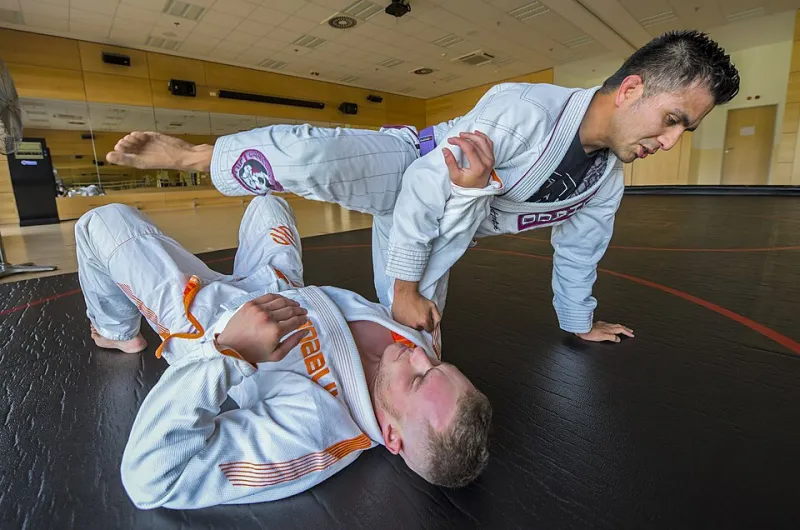
Photo: U.S. Air Force photo by Senior Airman Kevin Long, Public domain, via Wikimedia Commons
Friday night in Bury, the kettle is on, the laptop is balanced on a cushion, and a world-class jiu-jitsu match is about to look like a washing machine full of rash guards. If you're new to the mats at a Bury club, watching ADCC or IBJJF footage can feel like a different sport from the one you're learning. The good news? It isn't. Once you know what the rules are rewarding, the blur starts to make sense.
This is a beginner's viewing primer, not a referee course. Think of it as a cosy companion for the next time you settle down to watch the 2026 ADCC and IBJJF calendars with a brew and a notebook.
Start with the ruleset, not the highlight reel
ADCC and IBJJF are two different languages. ADCC is no-gi, submission-focused and famously physical. The first half of a match can pass with no points, so competitors often push the pace, hunt submissions and accept risk. When points come into play later, every takedown and pass matters. IBJJF runs gi and no-gi divisions with a detailed points system and advantages. It rewards control, near-misses and positional progress, which is why a match can look cagey and still be tactical.
For a Bury white belt, the simplest way to follow along is to ask one question: what is the person on top trying to make inevitable? Then watch their grips, hips and head position. The scoreboard is just the receipt.
Points, advantages and the quiet drama of a sweep
In IBJJF, a takedown is worth two points, a sweep is two, a guard pass is three, mount and back control are four each, and knee-on-belly is two. Advantages are smaller rewards for near-misses: a grip that almost becomes a sweep, a pass that nearly clears the legs. They can decide a close match, which is why competitors chase them like loose change.
A classic worked example is any high-level match where the bottom player is losing on the feet, pulls guard, then spends minutes setting up a sweep. Watch the grips: sleeve, collar, ankle, belt. The sweep itself can look almost gentle, a small shift of weight and a turn. But it flips the match. That's the lesson. Jiu-jitsu is often won by the person who makes the other person carry their weight in the wrong direction.
If you want a specific viewing exercise, find an old Marcelo Garcia ADCC match. He is a master of making sweeps look like conversations. Pause when he grips. Ask why that grip? What is it stopping? What is it setting up? You'll learn more from one paused minute than ten minutes of highlights.
Why the 'boring' top game is a masterclass
Newer grapplers often cheer for flying triangles and flying armbars. Fair enough. But the most important viewing skill is learning to appreciate a top player who spends four minutes shutting down grips, flattening hips and dripping pressure like a leaky radiator. It can look dull. It isn't. That's control.
When a top grappler pins someone, they are solving a puzzle: where is the escape? What grip stops it? How do I keep my base while advancing? The 'boring' periods are where the match is actually being decided. If you watch only the submissions, you miss the setup. If you watch the setup, the submission becomes obvious before it lands.
Which events suit which level of grappler
Brand-new to BJJ? Start with commentary-heavy shows and local UK events. Polaris and Grapplefest have strong UK followings and enough explanation to keep you oriented. They also feature grapplers you might see at Bury open mats or North West seminars, which makes the viewing feel connected to your own club.
If you're a few months in, try IBJJF no-gi footage. The points make the tactics visible. You can score along at home and argue with the referee, which is a time-honoured tradition.
If you're comfortable with the basics, ADCC is brilliant. The pace is relentless, the athleticism is wild, and the ruleset forces competitors to take chances. Just don't expect it to look like your Tuesday class. It's the same sport with the volume turned up.
A Bury viewing-night checklist
- Pick one match, not a whole card. Attention is a muscle.
- Bring a notebook and write down one question per match.
- Pause before a sweep or pass and guess what happens next.
- Watch the grips, not the limbs.
- Steal one idea for your next Bury session. One is plenty.
- Keep the biscuits within reach. This is sport, not a monastic retreat.
The best thing about watching high-level jiu-jitsu as a Bury beginner is that it makes your own mat time richer. You start to notice the tiny battles inside the bigger one. You see why your coach says 'frames' and 'base' and 'don't let them control your head'. You see that the sport is deep enough to watch for years and still learn something.
So next time the laptop is out and the match looks like a blur, don't panic. Find the grips. Find the hips. Find the person who is making the other person uncomfortable. That's the story. The rest is just the scoreboard catching up.